
For thousands of years, Ashwagandha (Withania somnifera) has been valued in Ayurvedic tradition for promoting balance, vitality, and overall wellness. Today, it is one of the world’s most researched medicinal herbs, recognized for its potential adaptogenic properties.
At SustainArth, we provide trusted, science-based information to help you explore the benefits, traditional uses, and modern research behind this remarkable botanical.
Ashwagandha (Withania somnifera) is a small evergreen shrub belonging to the Solanaceae (nightshade) family. Native to India, the Middle East, and parts of Africa, it has been used for centuries as one of Ayurveda’s most valued botanical ingredients.
The plant is primarily recognized for its roots, which contain naturally occurring bioactive compounds known as withanolides. These compounds continue to be the subject of scientific investigation for their potential antioxidant and adaptogenic properties.
The name Ashwagandha originates from Sanskrit:
Traditionally, the name symbolizes strength, endurance, and vitality.
Today, Ashwagandha is used worldwide in dietary supplements, functional foods, herbal formulations, and wellness products, while researchers continue to explore its diverse biological activities.
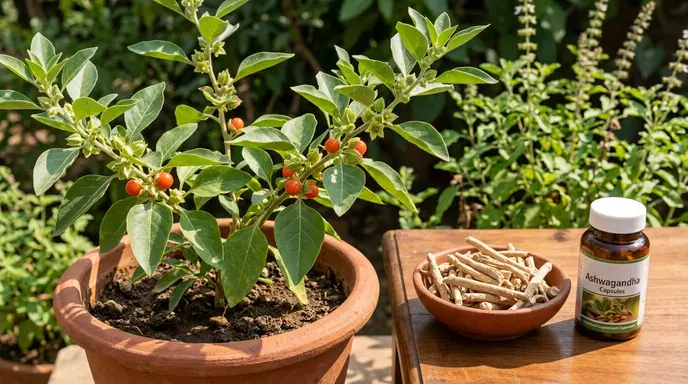
Modern scientific research continues to investigate the potential health-supporting properties of Ashwagandha. Although ongoing studies are expanding our understanding, existing evidence suggests that Ashwagandha may support several aspects of general wellness.
Ashwagandha is widely recognized as an adaptogenic herb that may help the body adapt to everyday physical and emotional stress while supporting normal physiological balance.
Research suggests that Ashwagandha may help promote relaxation and support healthy sleep quality in individuals experiencing occasional stress.
Several studies continue to investigate its potential role in supporting memory, concentration, focus, and cognitive performance.
Ashwagandha has been studied for its possible contribution to exercise endurance, muscle recovery, strength, and overall physical performance.
Its naturally occurring antioxidant compounds may contribute to supporting healthy immune system function and cellular protection.
Traditionally valued as a rejuvenating botanical, Ashwagandha continues to be explored for its role in supporting vitality, resilience, and healthy aging.
Ashwagandha has been an essential part of Ayurvedic practice for more than three millennia.
Classified as a Rasayana (rejuvenating herb), it has traditionally been used to promote long-term wellness and maintain physical and mental balance.
Historically, practitioners have incorporated Ashwagandha into wellness routines to support:
These traditional applications continue to inspire modern scientific investigation into the herb’s biological properties.
Ashwagandha is among the most extensively researched herbs in traditional medicine.
Scientists have identified numerous naturally occurring compounds within the plant, including:
Current research explores their potential role in:
Researchers continue to conduct laboratory and clinical studies to better understand how Ashwagandha may contribute to overall wellness. As scientific knowledge evolves, new findings continue to strengthen our understanding of this remarkable medicinal plant.
The quality of any botanical ingredient begins long before it reaches consumers.
Several factors influence the overall quality and consistency of herbal ingredients, including:
Independent laboratory testing helps verify botanical identity, purity, and compliance with recognized quality standards.
At SustainArth, we encourage transparency, sustainability, and responsible sourcing as fundamental principles for botanical wellness.
Ashwagandha is generally well tolerated by healthy adults when used appropriately. However, herbal supplements are not suitable for everyone.
Individuals should consult a qualified healthcare professional before using Ashwagandha if they:
Herbal ingredients should never replace professional medical advice, diagnosis, or treatment.
Responsible use begins with informed decision-making.
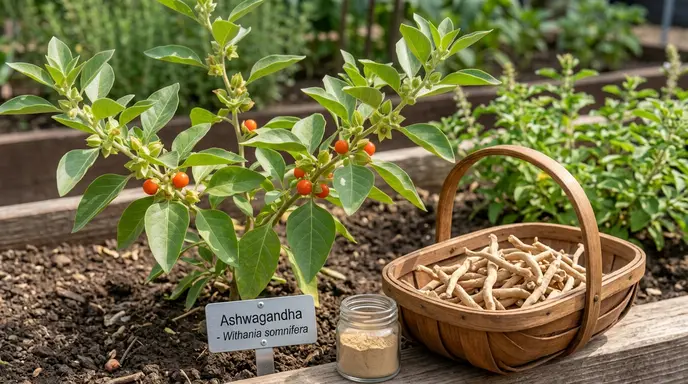
Ashwagandha is a medicinal herb traditionally used in Ayurveda and widely researched for its adaptogenic properties and potential role in supporting overall wellness.
Yes. Ashwagandha has been the subject of numerous laboratory and human studies investigating its safety, biological activity, and potential health applications.
An adaptogen is a natural substance that may help the body adapt to physical and emotional stress while supporting normal physiological balance.
The root is the most commonly used and traditionally valued part of the plant, although some preparations may also include leaves.
No. Ashwagandha should not be used as a substitute for prescribed medications or professional medical care.
No. Individuals with certain medical conditions or those taking medications should consult a healthcare professional before use.