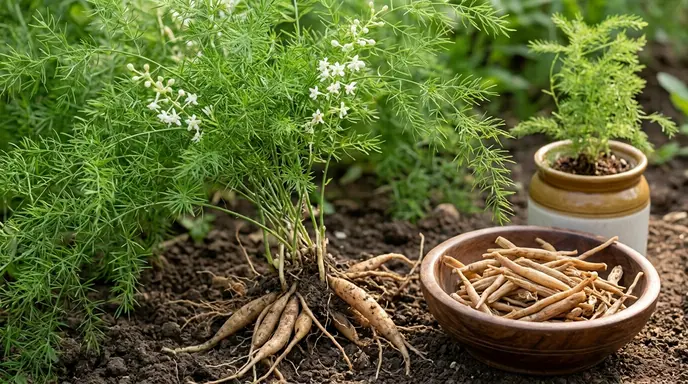
For centuries, Shatavari (Asparagus racemosus) has been valued in Ayurveda for its nourishing properties and connection to balance, vitality, and wellness. Today, it continues to gain scientific interest for its potential health-supporting benefits.
At SustainArth, we bring together traditional botanical wisdom and modern research to help you understand the power of medicinal plants.
Shatavari (Asparagus racemosus) is a perennial climbing plant belonging to the Asparagaceae family. Native to India and other regions of Asia, it has been used for generations in Ayurvedic wellness practices.
The plant is primarily valued for its roots, which contain naturally occurring plant compounds including steroidal saponins, flavonoids, and other phytochemicals that are the subject of ongoing scientific research.
The name Shatavari comes from Sanskrit and is traditionally associated with nourishment, strength, and vitality.
Unlike common asparagus (Asparagus officinalis), Shatavari is a distinct medicinal species that has a unique history within traditional herbal practices.
Modern research continues to explore the potential wellness benefits of Shatavari. While scientific studies are ongoing, traditional use and emerging research suggest that Shatavari may support various aspects of health.
Shatavari has been an important botanical in Ayurveda for thousands of years.
Traditionally classified as a Rasayana (rejuvenating herb), it has been used to support nourishment, vitality, and balance.
Traditional applications include supporting:
Ayurvedic practitioners have historically valued Shatavari as a deeply nourishing herb, particularly within women’s wellness traditions.
Shatavari has gained increasing attention from researchers studying medicinal plants and their bioactive compounds.
The roots of Shatavari contain several naturally occurring constituents, including:
These compounds are being investigated for their potential antioxidant, adaptogenic, and biological activities.
Current areas of research include:
Studies continue to examine Shatavari’s traditional role in supporting female wellness and reproductive health.
Researchers are exploring how naturally occurring compounds in Shatavari may help protect cells from oxidative stress.
Traditional applications and modern studies continue to investigate its role in maintaining digestive wellness.
Research is ongoing to better understand how Shatavari may contribute to overall health and vitality.
While traditional use is extensive, further high-quality clinical research continues to expand scientific understanding of this botanical.
The quality of any herbal ingredient depends on careful sourcing, processing, and testing.
Important quality considerations include:
Testing for purity, authenticity, and safety helps ensure consistent and reliable herbal ingredients.
At SustainArth, we believe responsible sourcing and transparency are essential for building trust in botanical wellness.
Shatavari has a long history of traditional use; however, herbal supplements may not be suitable for everyone.
Consult a qualified healthcare professional before using Shatavari if you:
Individual responses may vary, and herbal supplements should always be used responsibly.
Shatavari should not replace professional medical advice, diagnosis, or treatment.